
Cold vs flu vs COVID can overlap, but the patterns below help you decide what to do at home and when to book a visit. Most respiratory infections are viral and improve with time. The goal is to treat symptoms safely at home when appropriate and recognize red flags early.
Quick summary
- Colds usually start gradually (congestion, sore throat).
- Flu often hits abruptly (fever, body aches, major fatigue).
- COVID can look similar to either; testing may help clarify.
- Antibiotics do not treat viral infections.
- If you’re high-risk, early evaluation matters.
Typical patterns
- Common cold: gradual onset, runny/stuffy nose, sore throat, mild cough.
- Flu: sudden onset, fever/chills, significant body aches, headache, fatigue, cough.
- COVID: symptoms overlap; some people also notice loss of taste/smell, but not always.
What you can do at home
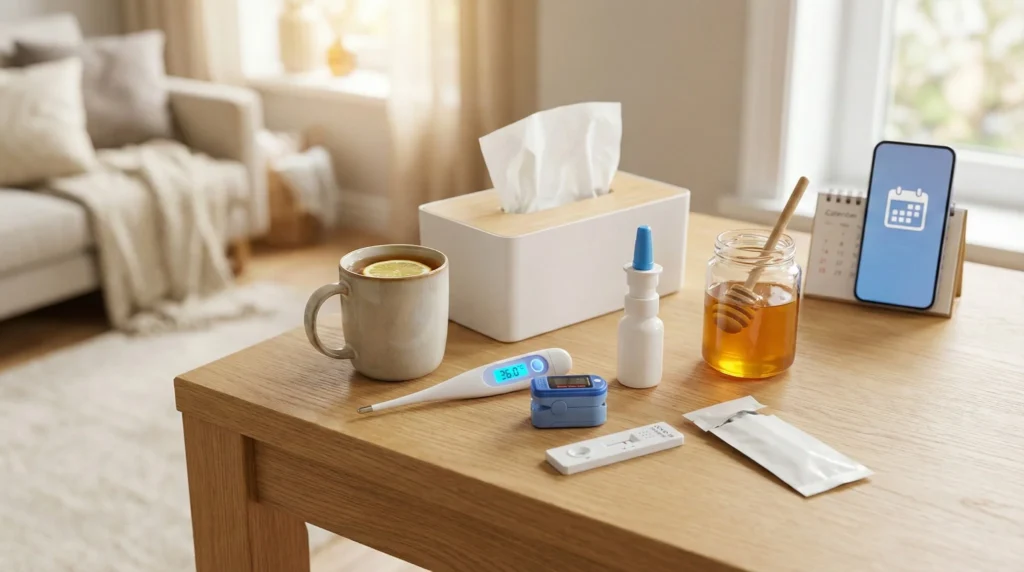
- Rest, hydration, warm tea/soup.
- Acetaminophen or ibuprofen if safe for you.
- Saline rinse/spray, humidifier, steam.
- Honey for cough (avoid in children under 1 year).
When to book a visit
- Symptoms last more than 10 days without improving, or worsen after improving.
- Fever persists, returns, or you feel progressively worse.
- Wheezing/asthma flare, or you have chronic conditions (heart/lung/kidney disease, diabetes), pregnancy, immune suppression, or age 65+
Call 911 / seek urgent care now
- Trouble breathing, persistent chest pain/pressure, new confusion, fainting, inability to stay awake, blue/gray lips/nail beds, or severe dehydration/not urinating.
Next step
More resources: Colds, Flu & Infections. If you’re unsure, call our office or book an in-person visit so we can help you choose the right next step.
Last reviewed: April 06, 2026